
For families — after discharge
Your teen is coming home from treatment. What happens with school?
Most families do not think about this until discharge is a week away. It is worth thinking about sooner, because school is the decision most likely to undo the work that treatment just did.
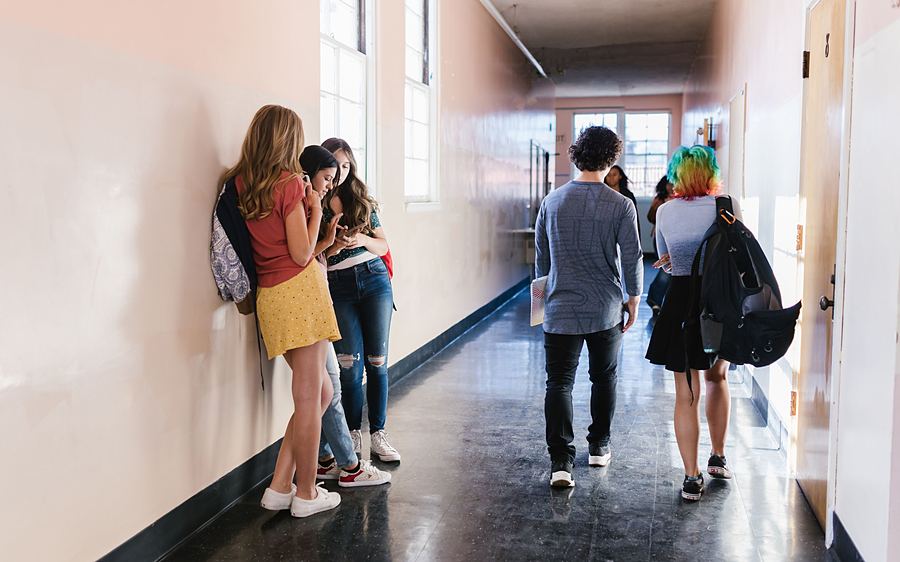
If your son or daughter has been in residential treatment, a partial hospitalization program, or intensive outpatient, you have spent weeks or months focused on one thing: getting them well. Now there is a date on the calendar, and a question nobody quite prepared you for.
They have to go back to school. But back to which school?
Why the familiar campus is harder than it sounds
The instinct is to send them back where they were. It feels like returning to normal, and normal sounds like exactly what everyone needs.
This is not about the quality of your teen's school. North Texas has excellent high schools with people who care a great deal about their students. The difficulty is that your teen carries a history into that building that the building cannot undo. The same routines, the same group chat, the same friendships formed around using. A comprehensive high school of two or three thousand students is not built to supervise one student's recovery through every hour of the day, and no counselor, however good, can be with them in the moments that matter most.
Some students manage it well. When a student struggles, it is not a failure of character, and it is not a failure of their school.
Ask your teen's treatment team what they have seen. They work with families at exactly this decision point, and they will tell you honestly how the transition tends to go.
Why homeschool solves one problem and creates others
The second instinct is to pull them out entirely. No campus, no old friends, no dealer in the parking lot. It feels like the safe choice, and for a few families it is the right one.
But consider what it removes along with the risk.
Isolation can work against recovery
Recovery runs on connection. A teenager alone at home all day, with a phone and the same contacts saved in it, has a great deal of unstructured time. Structure and peers are two of the things early sobriety tends to need most, and homeschooling reduces both.
You become the enforcer
At home, you are the counselor, the drug tester, and the person who decides whether today counts. That puts you in an adversarial role with your own child at precisely the moment your family is trying to rebuild trust.
They cannot practice being around people
At some point your teen has to function in the world again. Learning that with support is very different from being dropped back into a three-thousand-student campus cold, a year later, with no practice.
Somebody has to do it
Homeschooling a teenager in early recovery is close to a full-time job, and it usually lands on a parent who has already spent savings and time off on treatment.
There is a third option
A recovery high school is a real, accredited public high school where every student is in recovery from substance use disorder. Your teen earns a standard diploma, on a normal transcript, in a building where sobriety is the norm instead of the thing they are hiding.
Serenity High in McKinney is one of these. It opened in 1999, it is the oldest recovery high school in Texas, and more than 300 students have graduated from it.
What it actually looks like
A small campus, around ten students per teacher, self-paced coursework so a kid who fell behind during treatment can catch up without humiliation. Recovery support built into the school day. Frequent random drug testing, done by the school rather than by you. A calming center for when the day gets to be too much. Weekly community service. A chemical-free campus.
It is part of McKinney ISD, so the diploma is a McKinney ISD diploma. See the section on cost below for how enrollment is funded.
Is your teen a fit?
This part matters more than anything else on this page, and we would rather be honest than fill seats.
Serenity is for a student who wants to be sober and can say so in their own words. Not a student whose parents want them sober. The desire has to be theirs, even if it is shaky, even if it is new.
- They are coming home from treatment, or stepping down from residential, PHP, or IOP
- They can tell you, in their own words, that they want to stay sober
- They are in grades 9 through 12, ages 13 to 21
- They need to finish a diploma while recovery is still new
If that is not where your teen is yet, call anyway. We will talk it through with you and help you think about the right next step, and the door stays open when they are ready. We would rather have that conversation than have you feel like you have run out of options.
The three options, side by side
Return to the home campus
Familiar, keeps friendships and activities, no disruption to the transcript.
The student carries their history back into the same setting, and a large campus cannot provide recovery support through the school day.
Homeschool
Removes the old environment immediately. Full control over the day.
Can be isolating during early recovery, puts a parent in the accountability role, and requires significant parent time.
Recovery high school
Accredited diploma, sober peers, clinical support on campus, accountability that does not come from you.
Requires that the student actually wants sobriety, and the family provides transportation. No UIL sports or fine arts at the home campus while enrolled.
Talk to us
A conversation, not an application.
Talk to Allie Long, Assistant Principal A conversation, not an application. She will tell you honestly whether Serenity is the right fit for your teen, and help you look at other options if it is not.